China, the country with the world's largest car ownership and production and sales volume, has a commercial vehicle market of over 30 million vehicles, and millions of new cars are put into operation every year. With the rapid iteration and upgrading of emission standards and the continuous strengthening of the "trade in" policy, China's Zhengyuan Source continues to produce an astonishing number of second-hand commercial vehicles. Where do these old trucks and buses, which have made great contributions to the domestic economic development, ultimately end up?
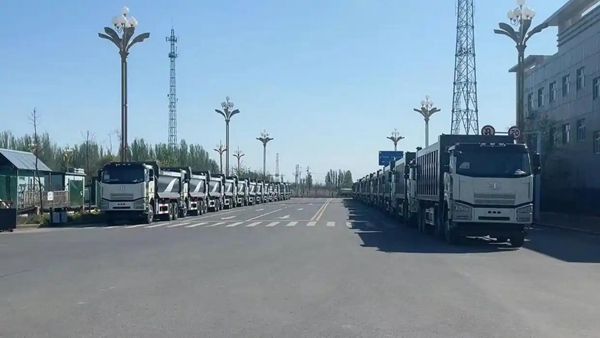
In recent years, an increasingly popular path of "going abroad" has become an important way for them to rejuvenate their "second spring". In 2024, the total export volume of second-hand cars in China has historically exceeded 400000 units, a year-on-year increase of over 45%, with commercial vehicles accounting for an important share. Behind this surging tide, who is "sweeping" China's second-hand commercial vehicles overseas? What kind of huge potential "trillion level" industry opportunity is hidden within this?
China's old trucks in the 'new maritime era': potential for millions of vehicles and policy 'engines'
The idea of 'one million old trucks going abroad' is not an unattainable fantasy, but a potential prediction based on the huge number of commercial vehicles in China and the trend of accelerating updates and iterations. At present, there is still a considerable scale of operating trucks with emission standards of National IV and below in China. With the expansion of the subsidy scope to this type of vehicle and the increase of new energy renewal subsidies under the "trade in" policy in 2025, the process of phasing out and updating will be accelerated, thus forming a huge pool of second-hand vehicles with export potential. Although the export volume of a single year has not yet reached the level of "one million vehicles", considering the number of newly added and scrapped commercial vehicles in China each year, as well as the fact that the second-hand car export business is still in the early stages of development, there is no doubt about the "one million vehicle level" market space that can be explored in the future and the cumulative export potential that will last for many years.
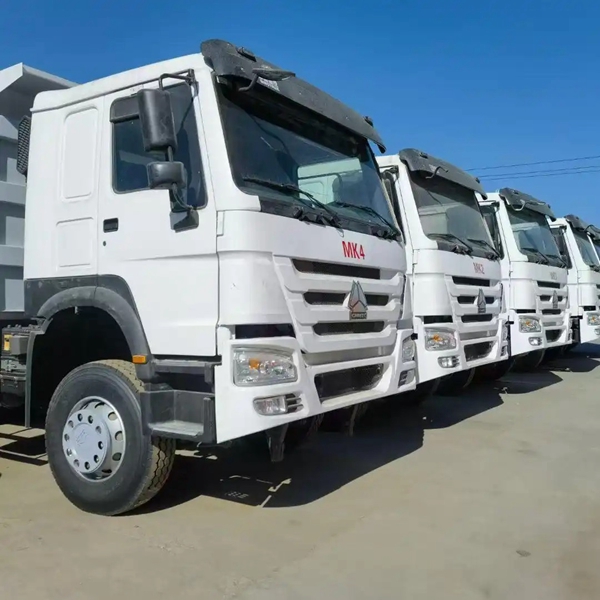
The driving force behind this wave of the 'new maritime era' is first and foremost the policy 'engine' at the national level. Since the launch of the pilot program for the export of second-hand cars in 2019, departments such as the Ministry of Commerce, the Ministry of Public Security, and the General Administration of Customs have been continuously working to overcome various obstacles in the export of second-hand cars. As early as 2022, relevant departments issued WM/T9-2022 "Quality Requirements for Export of Used Commercial Vehicles and Trailers", which clearly stated the relevant specifications for the export of commercial vehicles and trailers. In February 2024, the five departments jointly issued the "Notice on Further Improving the Work of Second hand Car Export", which further promoted the pilot experience to the whole country, clearly requiring localities to establish special work mechanisms to ensure export quality and regulate export order. This series of measures has laid a solid policy foundation for the large-scale and standardized development of second-hand car exports. According to incomplete statistics, the number of enterprises that have obtained qualifications for exporting second-hand cars is steadily increasing, gradually expanding from the initial pilot cities to more regions.
The actual export data also confirms the rapid trend. In 2023, the export volume of second-hand cars in China has reached about 275000 units, and in 2024, it has surged to 436000 units, a year-on-year increase of 46.5%, with an export value of up to 9.21 billion US dollars. Although this includes passenger cars, the growth contribution of commercial vehicles as an important export category cannot be ignored. According to industry analysis, in the next few years, with the further release of domestic vehicle sources and the gradual maturity of overseas channels, the export of second-hand commercial vehicles is expected to continue to maintain high-speed growth.
"Sweepers": Asia, Africa, Latin America and the "the Belt and Road" become major destinations
So, who is "sweeping" China's second-hand commercial vehicles overseas? From the perspective of export destinations, they are mainly concentrated in developing countries in Asia, Africa and Latin America, especially those along the "the Belt and Road", which have strong demand for infrastructure construction, high requirements for cost performance of vehicles, and close economic and trade ties with China.
The African market has always been an important destination for second-hand cars, as it is price sensitive and has high requirements for vehicle durability and easy maintenance. Chinese made second-hand dump trucks, tractors, cargo trucks, and buses are highly favored due to their relatively low prices and ability to adapt to complex local road conditions. Although some African countries have age restrictions on imported used cars, such as Kenya which usually requires cars to be under 8 years old, overall demand remains strong. Recently, some provinces have listed the export of second-hand cars as a key support direction when promoting economic and trade cooperation with Africa.
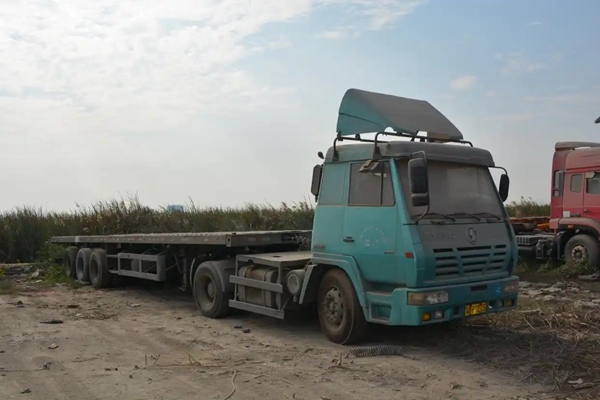
At the same time, the annual demand for commercial vehicles in Southeast Asia is also close to one million units, making it one of the important global automotive consumer markets. Although Japanese brands still dominate with their first mover advantage, Chinese brand new cars continue to gain market share due to their cost-effectiveness and gradually improving service networks. For second-hand commercial vehicles, especially in countries where infrastructure construction is accelerating and logistics transportation demand is strong, such as Indonesia, Vietnam, the Philippines, etc., there is also a stable demand for cost-effective trucks and buses. The local government's encouragement policies for new energy vehicles may also provide potential opportunities for early updates of second-hand new energy commercial vehicles in China.
In addition, Central Asian and CIS countries are geographically close to China and have convenient land transportation, making them traditional advantageous markets for China's automobile exports. In recent years, influenced by various factors, the demand for second-hand commercial vehicles in China has increased, especially in the fields of engineering construction and resource transportation where the demand for heavy-duty trucks is relatively stable. The Russian market has also become an important growth point for China's second-hand car exports during specific periods.
The demand characteristics of these "sweepers" are relatively clear. Firstly, they pursue high cost-effectiveness and expect to meet transportation needs at lower costs; Secondly, there is a preference for specific vehicle models. Africa and Central Asia have a greater demand for heavy-duty engineering trucks, while Southeast Asia favors light trucks, pickups, and buses; Furthermore, the acceptance of Chinese brands has gradually increased, thanks to the years of cultivation and reputation accumulation of Chinese brand new cars in the local market.
Behind the trillion dollar "big business": industrial chain, profit points, and risk challenges
The term 'trillion dollar business' may not only refer to the direct output value of second-hand car exports themselves, but also to the enormous value chain that can be leveraged and linked to the entire automotive circulation, aftermarket services, international trade, and domestic industrial upgrading. This industrial chain involves multiple links, starting with the integration of domestic vehicle sources, covering a wide range of resources from large fleets, bus companies, and rental companies that have phased out bulk vehicles, to auction houses and individual car owners' scattered resources. Subsequently, professional testing and evaluation are conducted to ensure that the vehicle condition is transparent and meets export standards. According to the target market demand, necessary maintenance and preparation are also indispensable. The next step is the complex and crucial domestic procedures, including ownership transfer registration, vehicle cancellation, export license application, and customs declaration and inspection. Finally, there is the organization of international logistics and customs clearance sales in the destination country, which extends to crucial overseas after-sales services.
The profit points on this chain are relatively diverse, including not only the domestic and international price difference of the vehicles themselves, but also the testing and certification service fees, maintenance and repair value-added, logistics and transportation service fees, financial and insurance service fees, as well as the sustained income brought by the huge potential overseas parts supply and maintenance service network in the future.
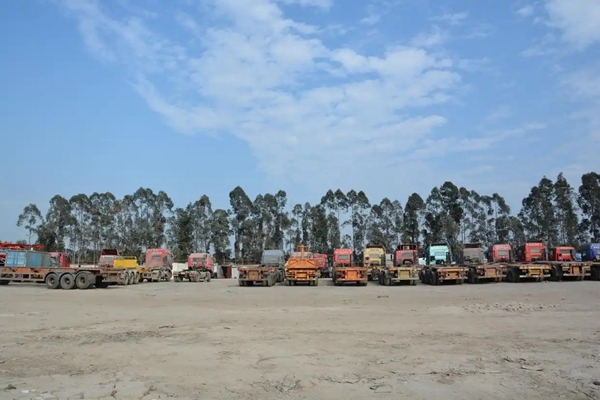
However, there are also significant risks and challenges hidden behind the opportunities. Export enterprises must first accurately grasp and respond to the ever-changing import policies, regulations, and technical standards of the target country, which places extremely high demands on information gathering and compliance capabilities. The weakness of the overseas after-sales service system is currently the biggest shortcoming in China's second-hand car exports. Commercial vehicles, as production materials, have extremely high requirements for timely and professional services. The lack of a complete supply and maintenance network of parts will seriously affect the reputation and business continuity of vehicles. The opacity of vehicle condition information and potential quality risks are also major hazards. If the quality is not strictly controlled, exporting unqualified vehicles overseas will cause irreparable damage to the reputation of "Made in China". National policies also explicitly prohibit the export of illegal vehicles such as theft, smuggling, illegal assembly, and scrapping. In addition, the high cost of international logistics, long transportation cycles, and complex payment settlement and exchange rate risks all pose a severe test to the financial strength and risk control ability of export enterprises. The fierce international competition cannot be ignored, as competitors from mature second-hand car exporting countries such as Japan, South Korea, Europe, and America have been established for many years.
Export 'feedback': activating the domestic market and reassessing residual value
The booming development of second-hand commercial vehicle exports has also had a positive "feedback" effect on the domestic market. The most direct manifestation is that it helps stabilize or even improve the residual value of used cars in China. With the rapid upgrading of domestic emission standards and the accelerated replacement of new energy vehicles, a large number of early fuel commercial vehicles in China's National IV, National V, and even some National VI are facing accelerated elimination. If there are no effective export channels, the concentration of these vehicles entering the domestic second-hand market will inevitably lead to a price "stampede". The export has found a new value realization path for these vehicles, avoiding their cliff like depreciation in the domestic market.
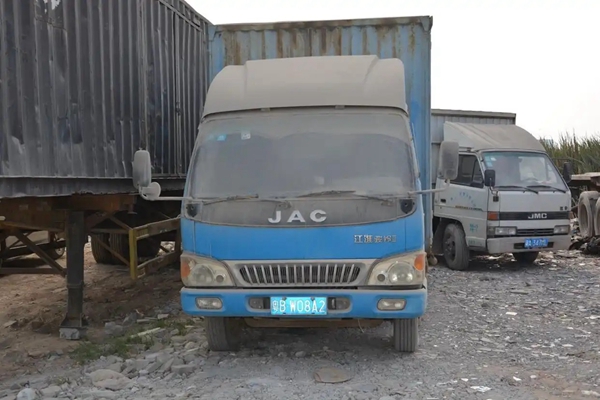
A higher residual value of second-hand cars can also reduce the economic pressure on car owners to replace new cars, thereby promoting new car sales and accelerating the technological upgrading and structural optimization of domestic commercial fleets. This is a tangible benefit for OEMs, new car dealers, and logistics companies pursuing higher efficiency and lower emissions. At the same time, an active second-hand car export market has brought new development opportunities for domestic second-hand car evaluation, testing, finance, logistics and other related service industries, which helps to build a more complete and efficient automobile market circulation system.
Observation of Truck E-Clan: The 'Wind' has appeared, and professional operation is the only way to 'make real money'
The trucking industry believes that the export of second-hand commercial vehicles in China by 2025 is indeed standing on an unprecedented "trend". The continuous support of policies, the huge supply of domestic vehicles, and the real demand of emerging markets overseas have jointly given birth to this market with enormous potential. It not only finds a way out for the surplus of used cars in China, but also optimizes the circulation of the domestic automotive industry at a deeper level, and provides considerable business opportunities for participants.
However, under the "wind wave", gold is not everywhere, and the extensive "porter" model is difficult to sustain. To "make real money" in this wave, specialized, branded, and service-oriented operations are the only way. This requires export enterprises to have a deep understanding of the target market, strict quality control capabilities, efficient supply chain integration capabilities, and most importantly, establish a sustainable after-sales service guarantee system in overseas markets, and strive to build a good reputation for China's second-hand commercial vehicles.
From 'selling old cars' to' exporting services and brands', this is not only the direction for upgrading China's second-hand commercial vehicle export business, but also the key to whether it can transform the 'trend' into a sustainable 'dividend'. This' new voyage 'presents both opportunities and challenges. Only the' navigator 'who works diligently and operates in a standardized manner can ultimately sail towards the shore of success and truly share the potential' trillion level 'industrial chain value hidden behind it.